Book soon Openers · Kawartha Lakes
Belt-Drive Opener Repair
There is a new squeal from the front of the rail, up near the header, on every cycle. The belt has started tracking to one side and its edge is fuzzy where it has been rubbing.
Call now · open 24/7(249) 490-5342Right now
Before the door is looked at
Call (249) 490-5342, open 24/7.
Pull the release with the door fully closed whenever possible, and keep the opening clear as you do. Once the trolley lets go, the door is held by its springs alone, and a closed door can still shift unexpectedly.
Never raise the force setting to push a door through a frozen seal, a stiff track or a tired spring; force is set as low as reliably closes the door, and the reason the door is hard to move is fixed instead.
In plain words
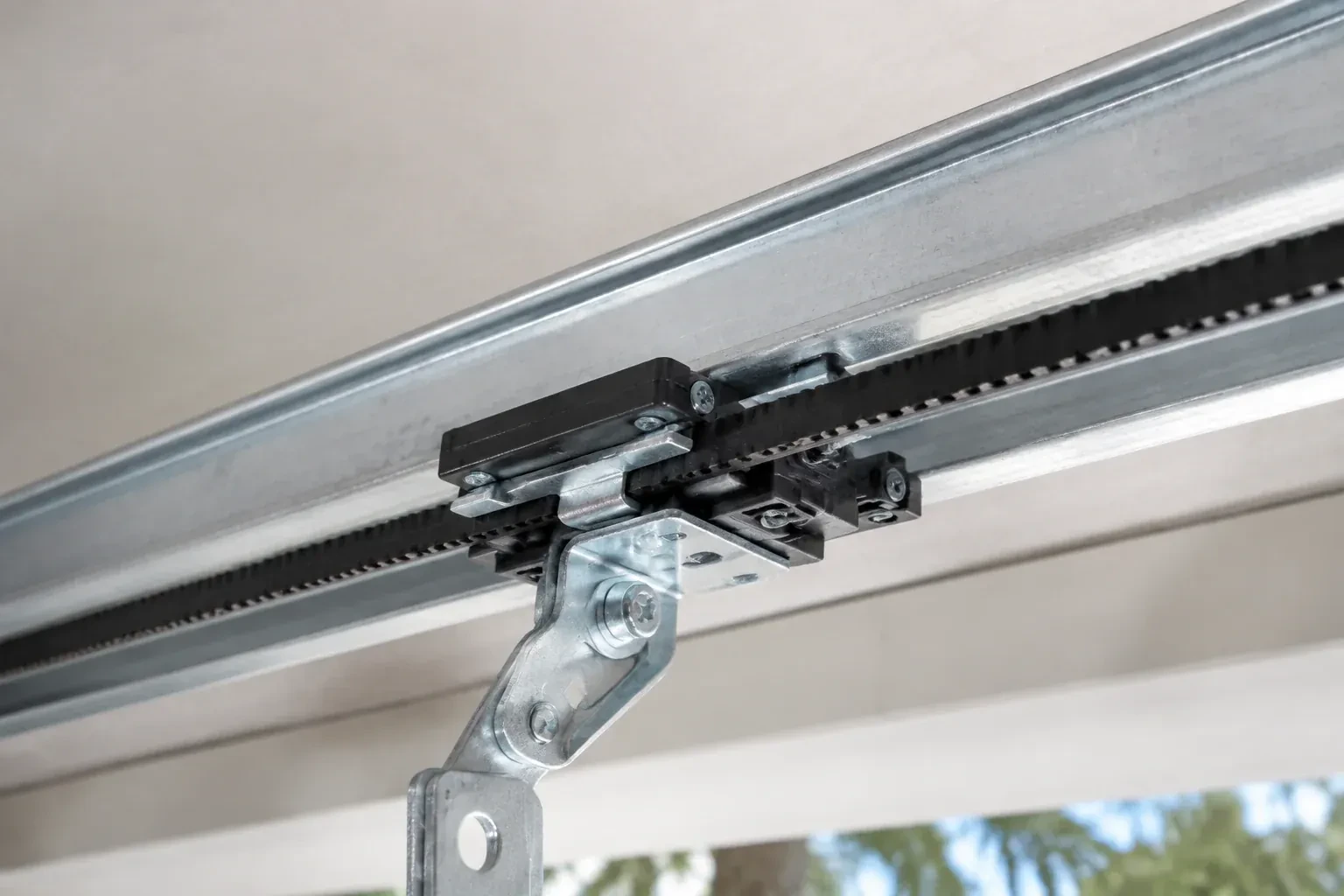
The most common belt-drive repair is the simplest: the belt has stretched over thousands of cycles and hangs slack under the rail. On its way up it slaps the rail and skips a tooth or two on the sprocket. Tension lives at the trolley, where a threaded shaft, a spring and a square nut set how much the belt is pulled taut. The technician sets that spring to the maker's stated length, confirms a little give at mid-span, then runs the door and listens. If the belt has stretched past what the adjuster allows, or the rubber has aged, a new belt goes in instead.
How the visit goesAfter the power came back you pulled the red cord to get the car out. Since reconnecting, the door stops short of the floor, and no amount of turning the limit adjustment brings it the rest of the way down.
Belt-Drive Opener Repair · Kawartha Lakes
How the visit goes
- 1
Balance first, belt second
Nothing on the belt drive is judged until the door has been lifted by hand. The technician unplugs the operator, pulls the red cord to free the trolley and raises the door: it should rise with moderate effort, stay put about a metre off the floor and settle gently at the top. A belt is designed to guide a balanced door, not to lift a heavy one, so a door that sags or drops is loading the belt, trolley and sprocket far beyond their design. That is spring work, agreed as its own item before any belt is replaced, otherwise a new belt would simply wear out the way the old one did.
- 2
Re-tensioning a belt that has stretched
With the operator unplugged and the trolley released from the door, the technician turns the square nut on the inner trolley a little at a time, drawing the belt up until the tension spring reaches the length the maker specifies. Each turn lifts the belt slightly. They press the belt at mid-span to feel for the small give that means it is neither slack nor strained, then reconnect the trolley and run the door by motor, listening at the sprocket for the rattle that says the belt is still loose or has gone too tight. A belt that will not reach its spring length with the adjuster at its limit has stretched too far and is replaced instead.
- 3
How to check the belt by eye
You leave knowing what a healthy belt looks like from the garage floor. It runs level, just above or inside the rail, with no visible sag between the motor head and the header. Its teeth are even along the whole length and its edges are square, not fuzzy. Every few months, with the door closed, glance up and along the rail; then open the door and look again, since sag shows on the return run. If the belt begins to hang below the rail, slap on the way up or click at the same point each cycle, that is the moment to call, while it is a tension adjustment rather than a stalled door.
In the van
- Door arm and clevis pins
- Inner and outer trolley
- Rail joint brackets and stop bolts
- Belt tension spring and square nut
- Photo-eye sensor pair
What affects the quote
- 1
Idler pulley
A squealing or wandering pulley at the header end of the rail is a separate part and a few extra minutes with the belt slack, quoted only when the inspection finds it.
- 2
Adjustment or replacement
A tension adjustment with the safety tests is the smallest visit. A new belt, with a fresh clip, phasing and relearned limits, is a larger one, and the inspection decides which you need.
- 3
Belt length and type
A belt for an 8 ft door rail is longer than one for a 7 ft rail, and belts differ by maker and tooth pitch, so the part named on the quote follows the operator's model.
Same fees day, night or weekend.
Belt-Drive Opener Repair: questions
Can I adjust the belt tension myself?
The adjustment nut is reachable and some owners do, but there are two things to get right. The operator must be unplugged and the door released first, and the spring must be set to the maker's length rather than tightened until the sag disappears, since an over-tight belt is noisy and hard on the motor. After any change, the reversal tests should be repeated. Many people prefer to have it done during a service.
What information helps when I book a belt-drive repair?
The make and model printed on the motor head, roughly how old the operator is, what the belt is doing and what it sounds like, when it started, whether the red cord has been pulled and whether anyone has adjusted anything. A photograph along the rail showing the belt, and one of the label, settle most questions before the visit.
Can a belt from any opener be used, or does it have to match?
It has to match. Belts are made in lengths for particular rails, so a 7 ft door rail and an 8 ft rail take different belts, and the teeth must match the sprocket's pitch. The clip or link that joins the belt to the trolley also differs between makers. The technician reads the model from the head unit's label and brings the belt made for it.
Openers & Access
Bigger photo, sooner job: Emergency Book soon Plan ahead
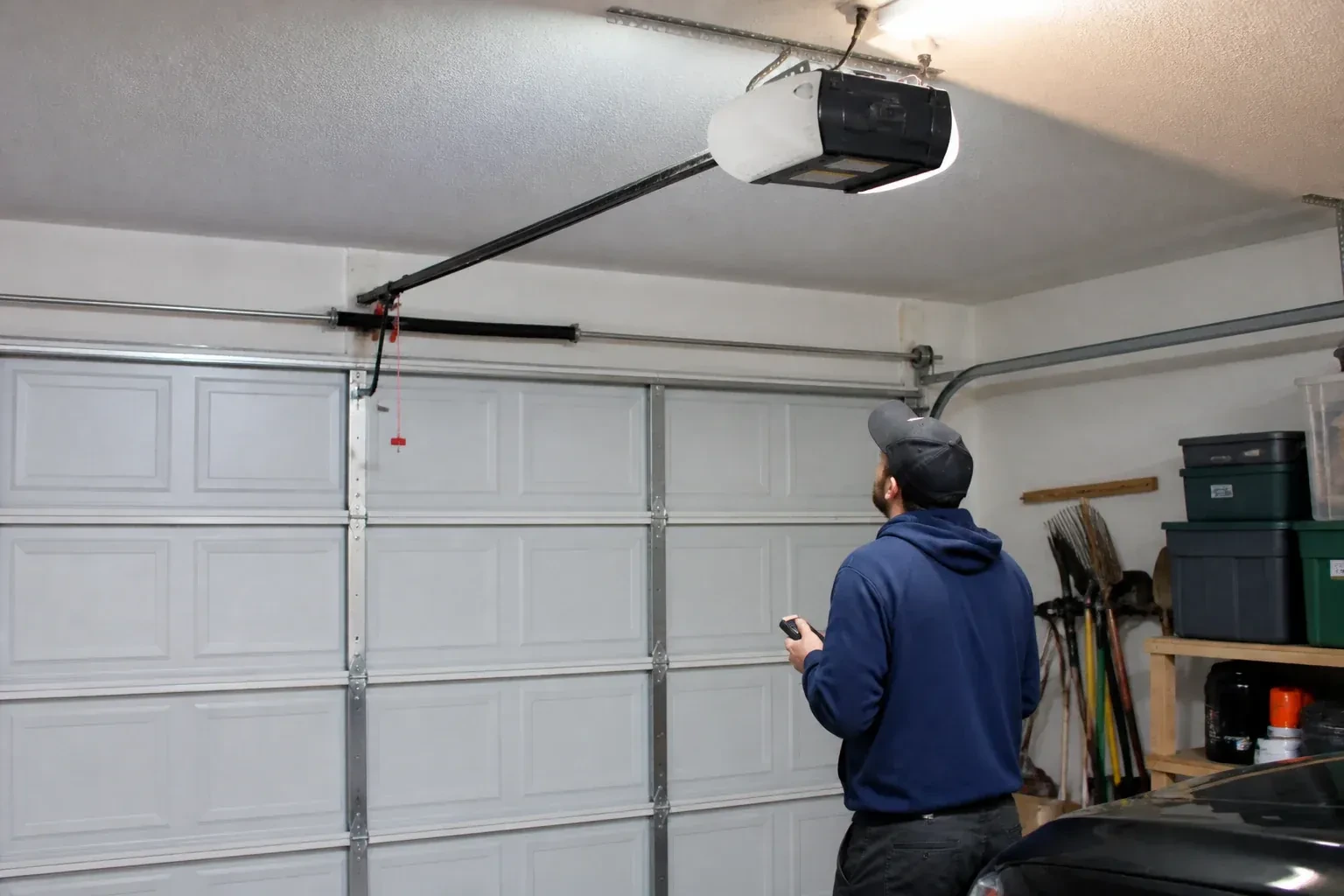 Book soonGarage Door Opener Diagnosis and RepairThe door goes up perfectly.
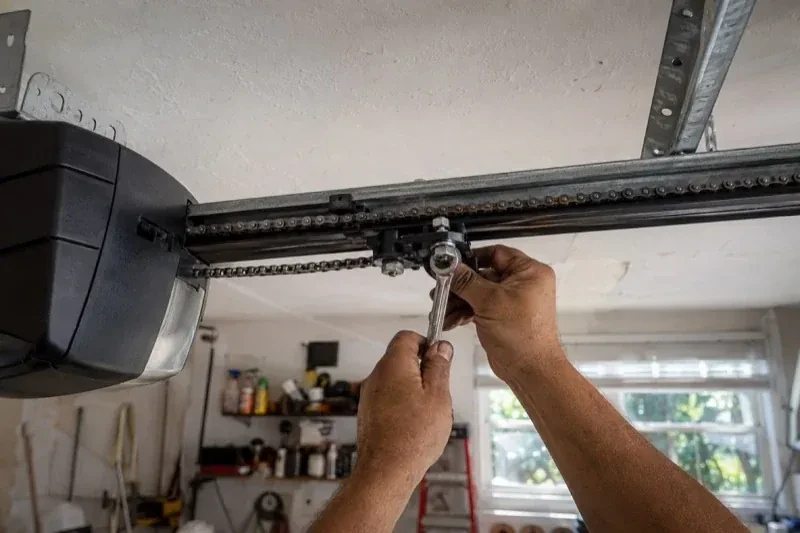 Book soonChain-Drive Opener RepairThe door opens about a third of the way and stops.
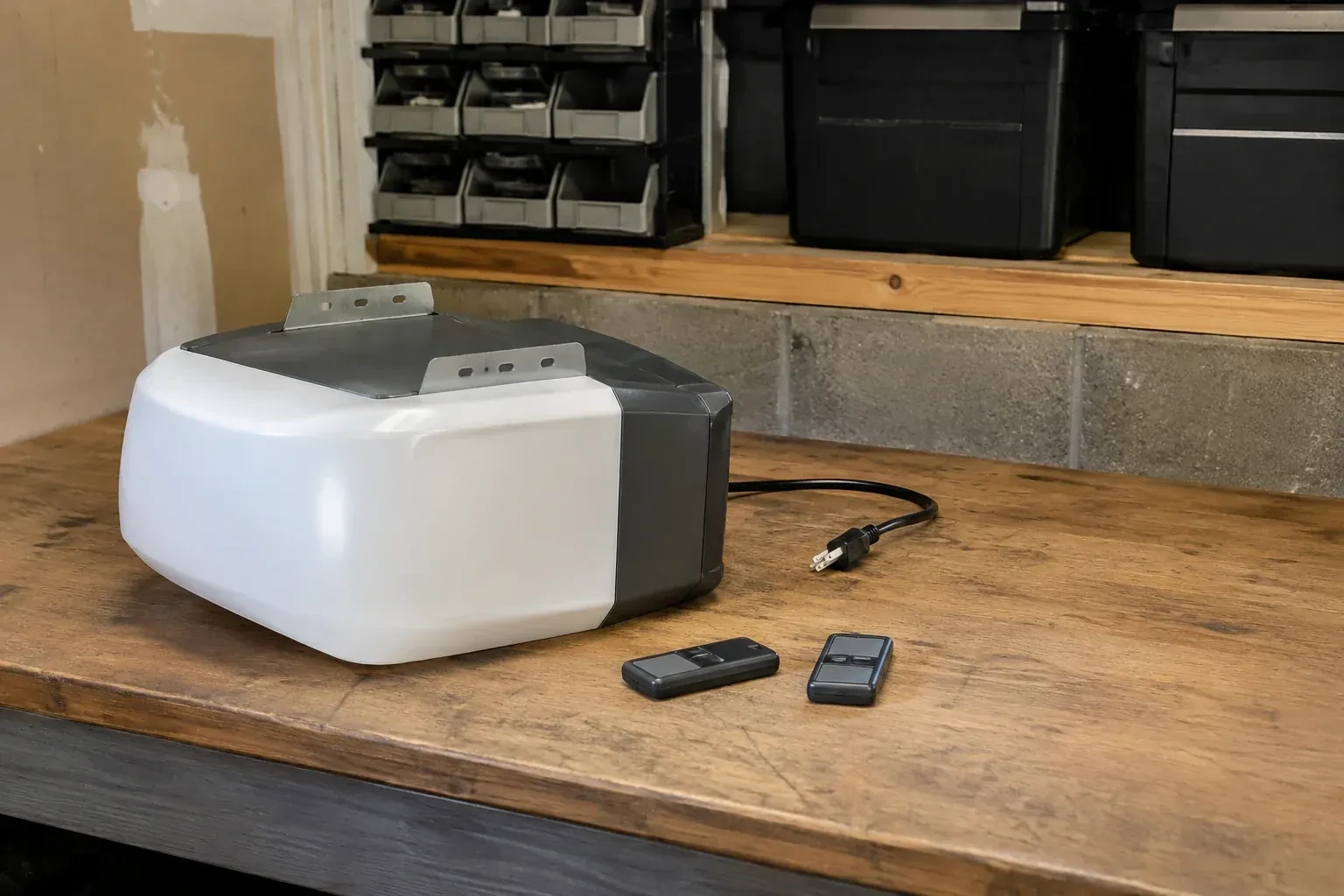 Plan aheadGarage Door Opener Replacement
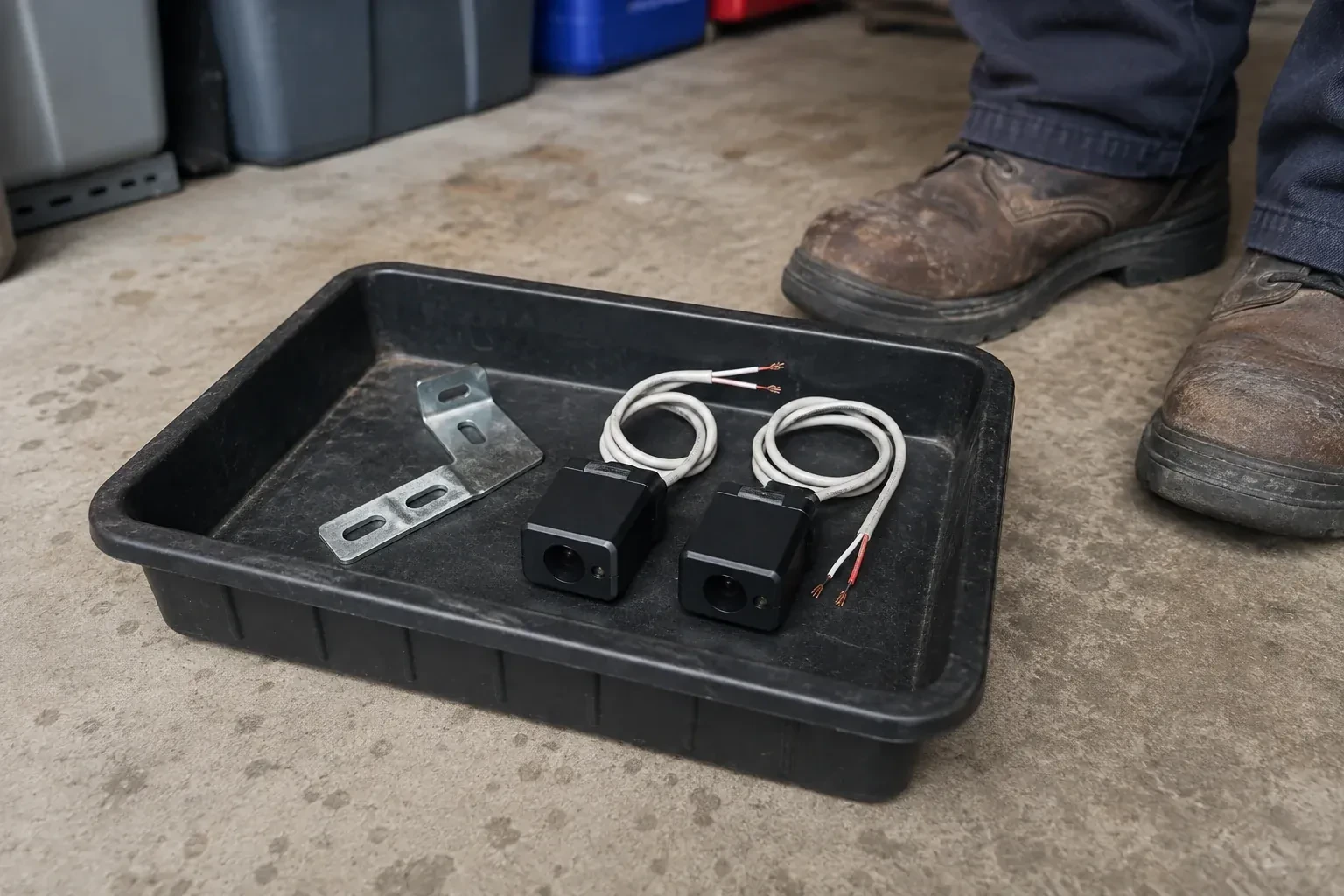 Book soonPhoto-Eye Sensor Alignment or ReplacementAfter a cold night the door stays open until the garage warms up.
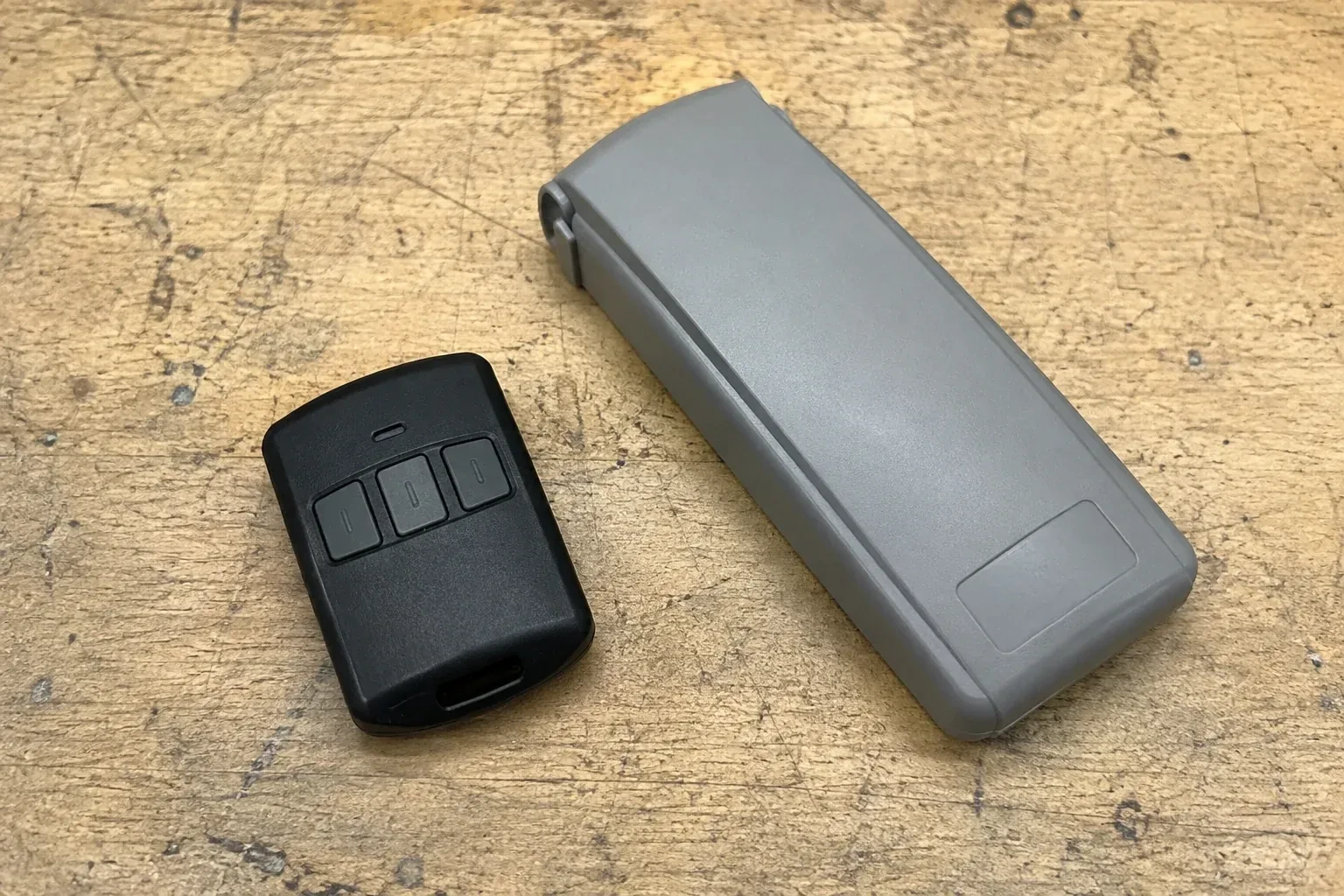 Plan aheadGarage Door Remote and Keypad Programming
Belt-Drive Opener Repair near you
Kawartha Lakes, Ontario
Kawartha Lakes information
- Town
- Kawartha Lakes, Ontario
- In business
- 21 years
- Hours
- Open 24/7 · nights, weekends and holidays, same fees
- Phone
- (249) 490-5342
- Visits
- On-site assessment preferred. Request a visit or call.
What the census means at the door
56%
Older homes. About 56% of homes in Kawartha Lakes were built in 1980 or earlier, according to the 2021 Census.
Decades of freeze and thaw work on the concrete apron in front of an older garage, and an uneven floor means the bottom seal meets a gap on one side. A thicker seal or an adjusted threshold closes it and keeps snow and cold air out.
84%
Mostly houses. Single-detached houses make up about 84% of homes in Kawartha Lakes (2021 Census).
Detached houses commonly have attached two-car garages with a wide double door, which is a heavy door on a pair of torsion springs. Spring and cable work on these doors is done as a matched set so the door lifts level and the opener carries only its intended load.
Nearby
Open 24/7
Request a visit
There is a new squeal from the front of the rail, up near the header, on every cycle.
Call now · open 24/7(249) 490-5342- On-site assessment preferred
- Same fees day, night or weekend
- 21 years in business