Book soon Openers · Kawartha Lakes
Photo-Eye Sensor Alignment or Replacement
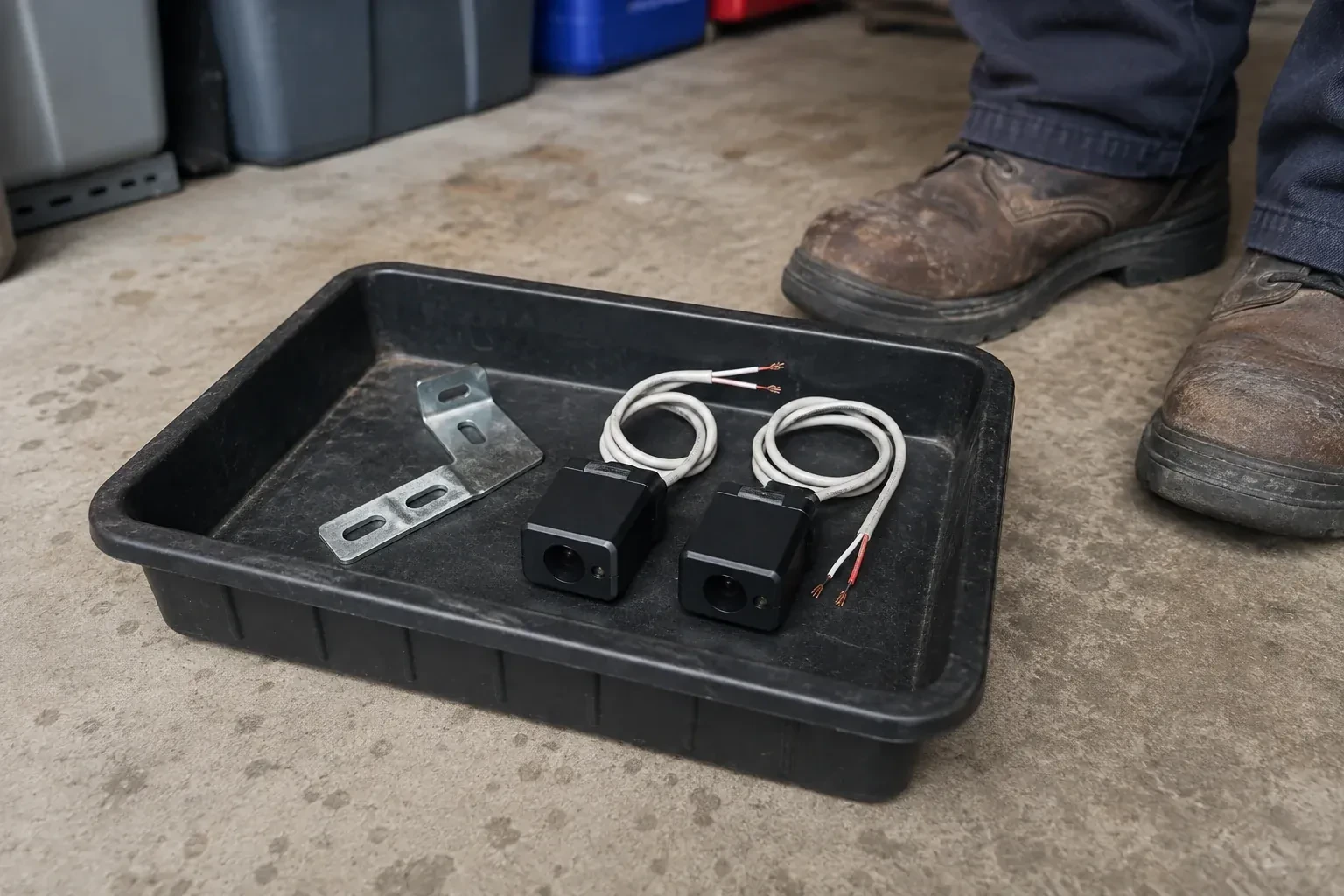
After a cold night the door stays open until the garage warms up. There is frost on the sensor lenses and a ridge of salty slush piled against the brackets where the snow blower was parked.
Call now · open 24/7(249) 490-5342Right now
Before the door is looked at
Call (249) 490-5342, open 24/7.
Never bypass, tape over or relocate the sensors to make a door close; a door that reverses is reporting something worth fixing.
In plain words
Your opener has been trying to tell you what is wrong. The head unit flashes its light a set number of times, or blinks a pattern on its up and down arrows, and each pattern maps to a cause on the maker's chart: beam blocked or misaligned, wire cut or disconnected, wires reversed or shorted. Down at the floor, many sensor pairs carry an indicator on each side, though some older pairs light only the receiver; check that model's chart, since a receiving light going out or flickering usually points to alignment. The technician reads both sets of signals first, which is why the repair usually takes one visit.
How the visit goesSince shelving went up along the garage wall, the door will not close and both sensor lights are dead. A screw or staple may have gone through the thin wire that runs from the opener to the sensors.
Photo-Eye Sensor Alignment or Replacement · Kawartha Lakes
How the visit goes
- 1
Counting the opener's flashes
The head unit has its own way of reporting a sensor problem. Many openers flash the light bulb a fixed number of times when close is pressed and the beam is not satisfied, and newer units blink a code on their up and down arrows that separates a blocked or misaligned beam from a cut wire, a disconnected pair or reversed wiring. The technician reads the model off the label, counts the pattern and matches it to the maker's chart. This is what keeps the visit efficient: a code that says the circuit is open sends the work to the wiring, while a code that says obstructed or misaligned sends it to the brackets.
- 2
Cleaning and protecting the lenses
Lenses are wiped with a soft cloth and a mild cleaner, never scraped, and the housings are checked for cracks that let in water. Sensors that have been sitting in the strip where slush and salt collect are raised within the permitted height range and their brackets sealed. On a wall where the wire runs exposed, a slim protective channel keeps it clear of bins and bikes. Where mice have been at the wire, the new run is routed higher along the wall and dropped straight down to each sensor. These small measures are what keep a repair from repeating the following winter.
- 3
Wiring that stays put
The wire between the head unit and the sensors has been secured along the ceiling and walls, clipped clear of the track and, where it was exposed, run inside a protective channel. Two things keep it that way. First, when anything is fastened to those walls or that ceiling, from shelving to a bike hook to drywall, look for the thin wire before driving a screw or a staple. Second, if mice have been in the garage, a chewed wire is a common sign, so a dark sensor light after a sighting is worth a look at the run. Either way, the sensor lights will tell you the moment the circuit is open.
In the van
- Wall or floor angle brackets
- 2x4 test block
- Receiving-eye sun shade
- Concrete anchors
- Protective wire channel
What affects the quote
- 1
Undoing an earlier shortcut
Sensors taped together beside the motor, mismatched pairs from different generations or a bypassed circuit are put right first, which means new wire down each side and fresh brackets at the doorway.
- 2
Length and route of the wire run
A damaged section near a sensor is a short repair. A fresh run from the motor to both sides of the doorway takes longer, more so where the wire is buried in a finished ceiling.
- 3
Sun and reflection remedies
Swapping the sensors side to side is a small addition when the wiring reaches. Fitting a shade, or extending the wire so the receiver can move, is a little more and is listed on its own.
Same fees day, night or weekend.
Photo-Eye Sensor Alignment or Replacement: questions
What tests are done before the technician leaves?
Two, and you are invited to watch. With the door closing, an object is passed through the beam and the door has to halt and climb back to the top. A 2x4 laid flat beneath the door's centre comes next; closing onto it must make the door back off on contact. The door is also run from the wall control and a remote, the opener's warning flashes are confirmed gone, and both sensor lights are shown steady.
How do I test the sensors each month?
Start the door closing and, while it is moving, swing a broom handle through the beam low across the opening; the door should halt and travel back up. Next, put a 2x4 flat beneath the door's centre and run the door onto it; it should back off as soon as it touches. If either test fails, close the door first if you can, use it by hand with the manual release, and book a visit; do not release it if it feels heavy.
How high off the floor should the sensors sit?
Low. The industry checklist expects the beam no more than roughly 15 cm (6 in) up from the floor, so that a small child, a pet or a bicycle wheel breaks it. Both sensors are set at the same measured height and level with each other, since a difference of a couple of centimetres is enough to lose the beam. Within that rule the technician can raise them a little to keep them out of the strip where slush collects.
Openers & Access
Bigger photo, sooner job: Emergency Book soon Plan ahead
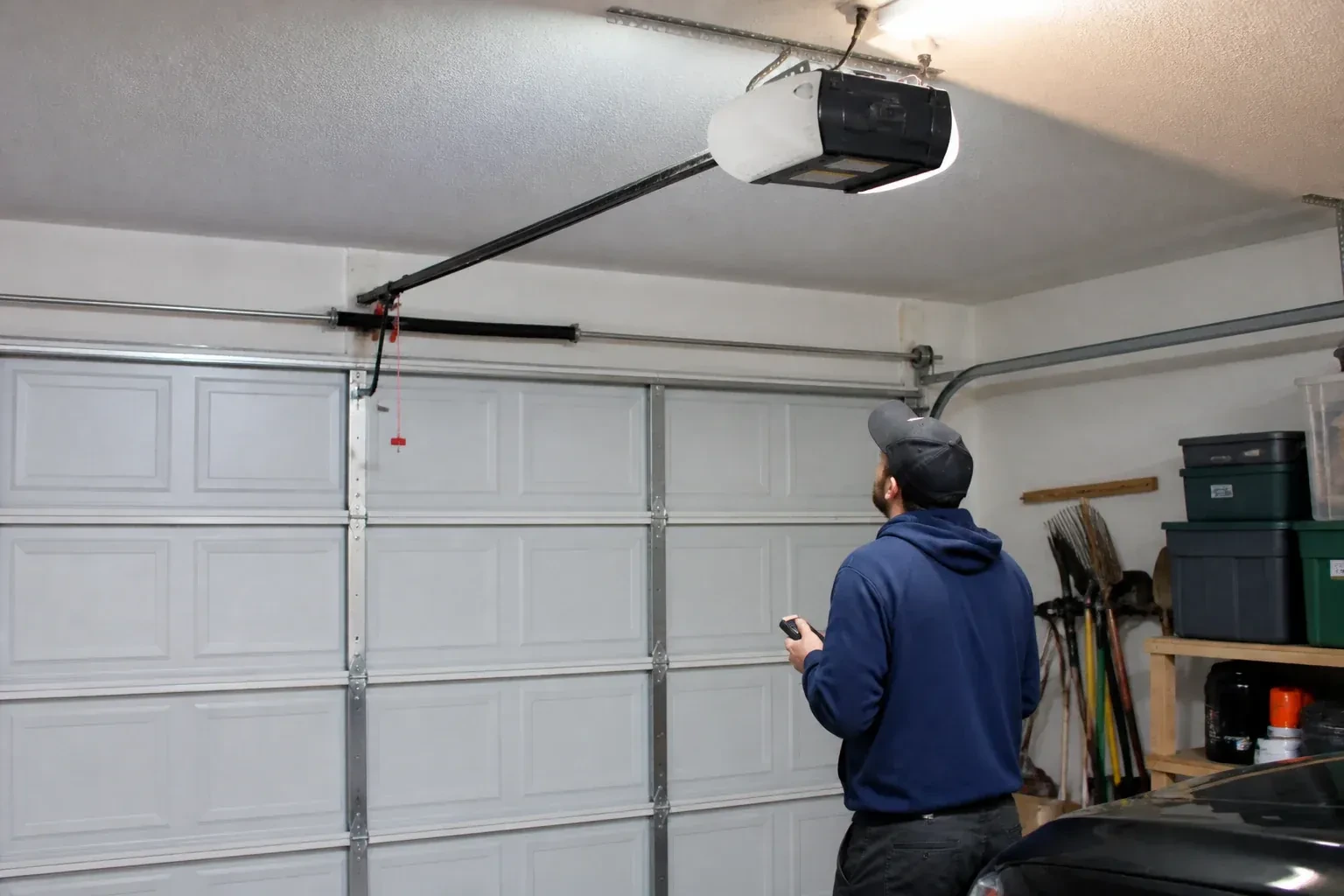 Book soonGarage Door Opener Diagnosis and RepairThe door goes up perfectly.
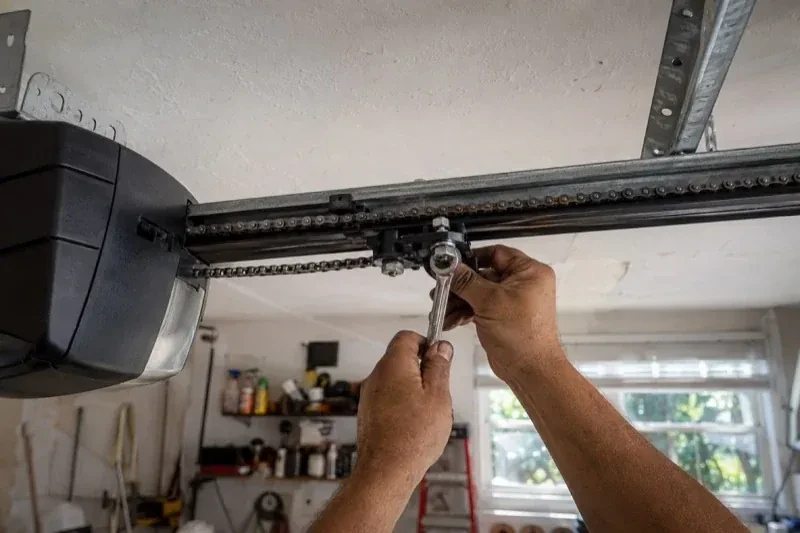 Book soonChain-Drive Opener RepairThe door opens about a third of the way and stops.
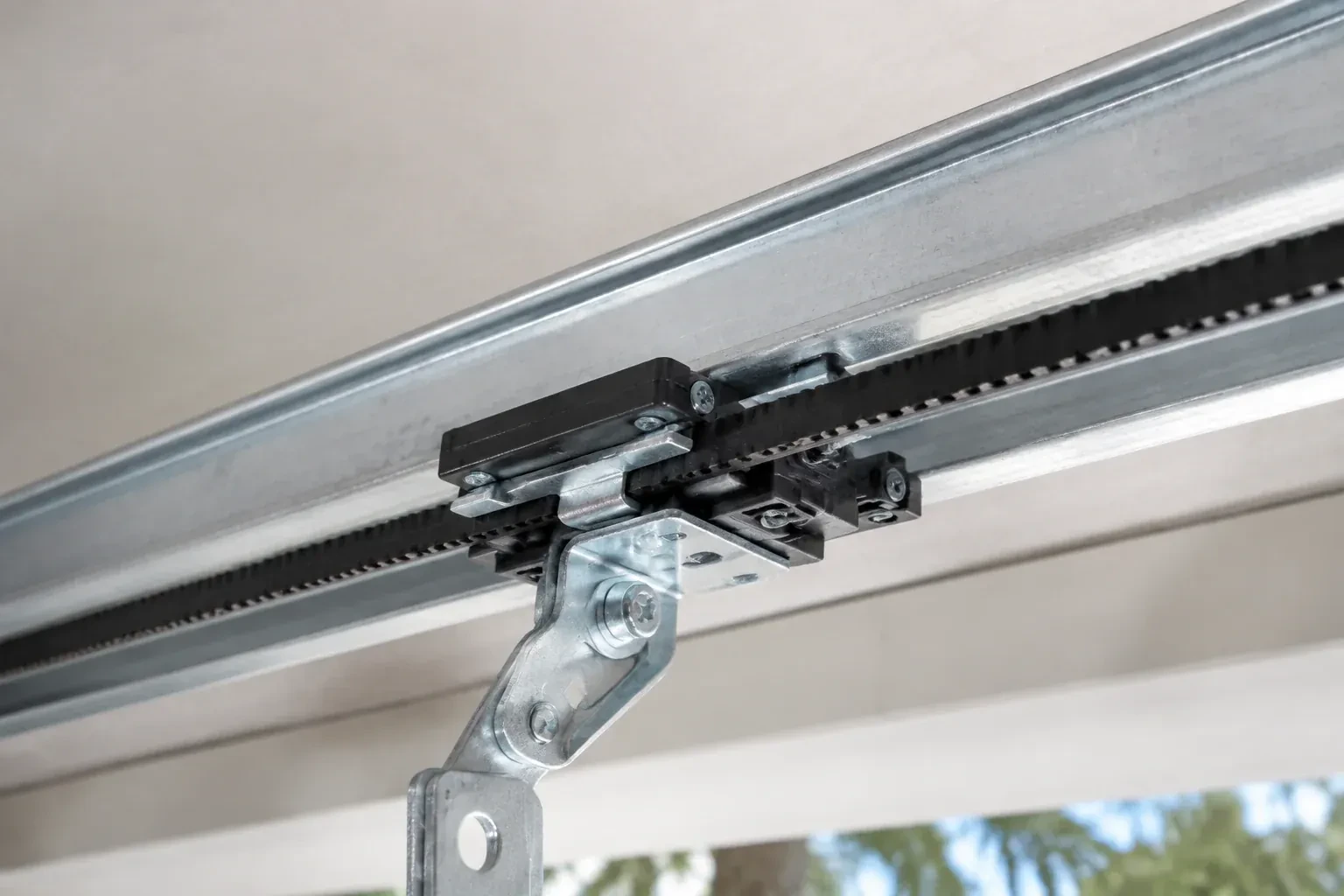 Book soonBelt-Drive Opener RepairThere is a new squeal from the front of the rail, up near the header, on every cycle.
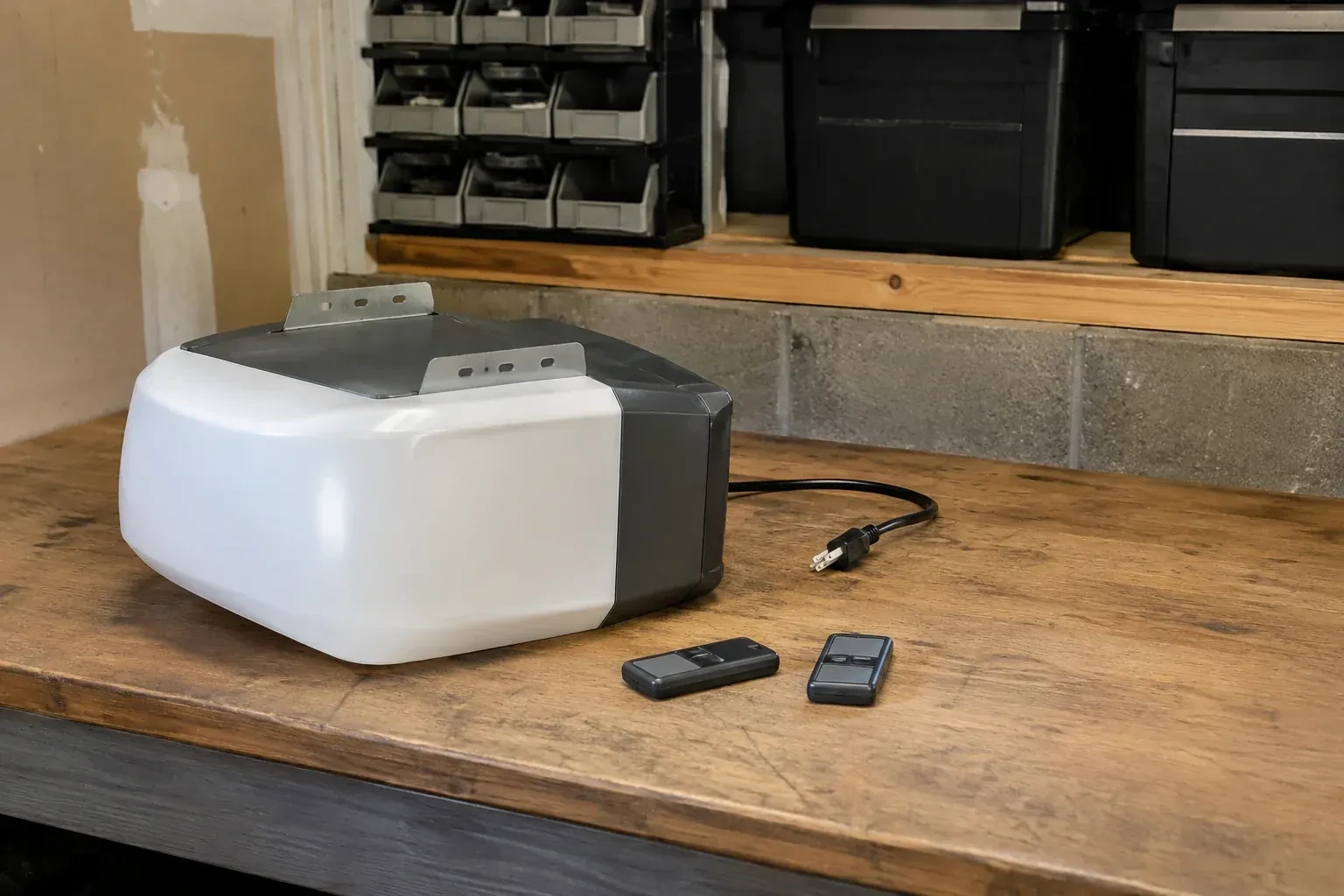 Plan aheadGarage Door Opener Replacement
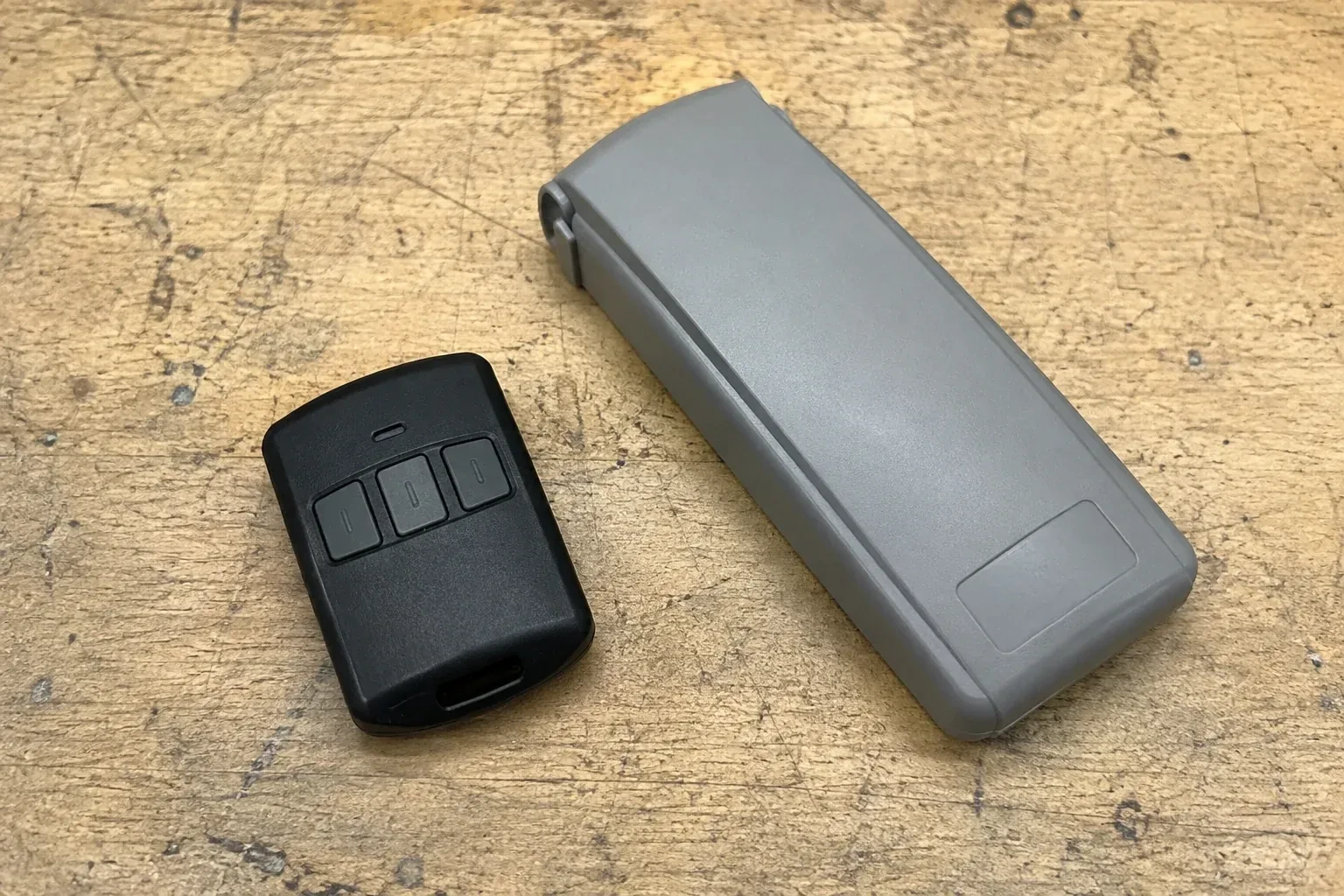 Plan aheadGarage Door Remote and Keypad Programming
Photo-Eye Sensor Alignment or Replacement near you
Kawartha Lakes, Ontario
Kawartha Lakes information
- Town
- Kawartha Lakes, Ontario
- In business
- 21 years
- Hours
- Open 24/7 · nights, weekends and holidays, same fees
- Phone
- (249) 490-5342
- Visits
- On-site assessment preferred. Request a visit or call.
What the census means at the door
56%
Older homes. About 56% of homes in Kawartha Lakes were built in 1980 or earlier, according to the 2021 Census.
Decades of freeze and thaw work on the concrete apron in front of an older garage, and an uneven floor means the bottom seal meets a gap on one side. A thicker seal or an adjusted threshold closes it and keeps snow and cold air out.
84%
Mostly houses. Single-detached houses make up about 84% of homes in Kawartha Lakes (2021 Census).
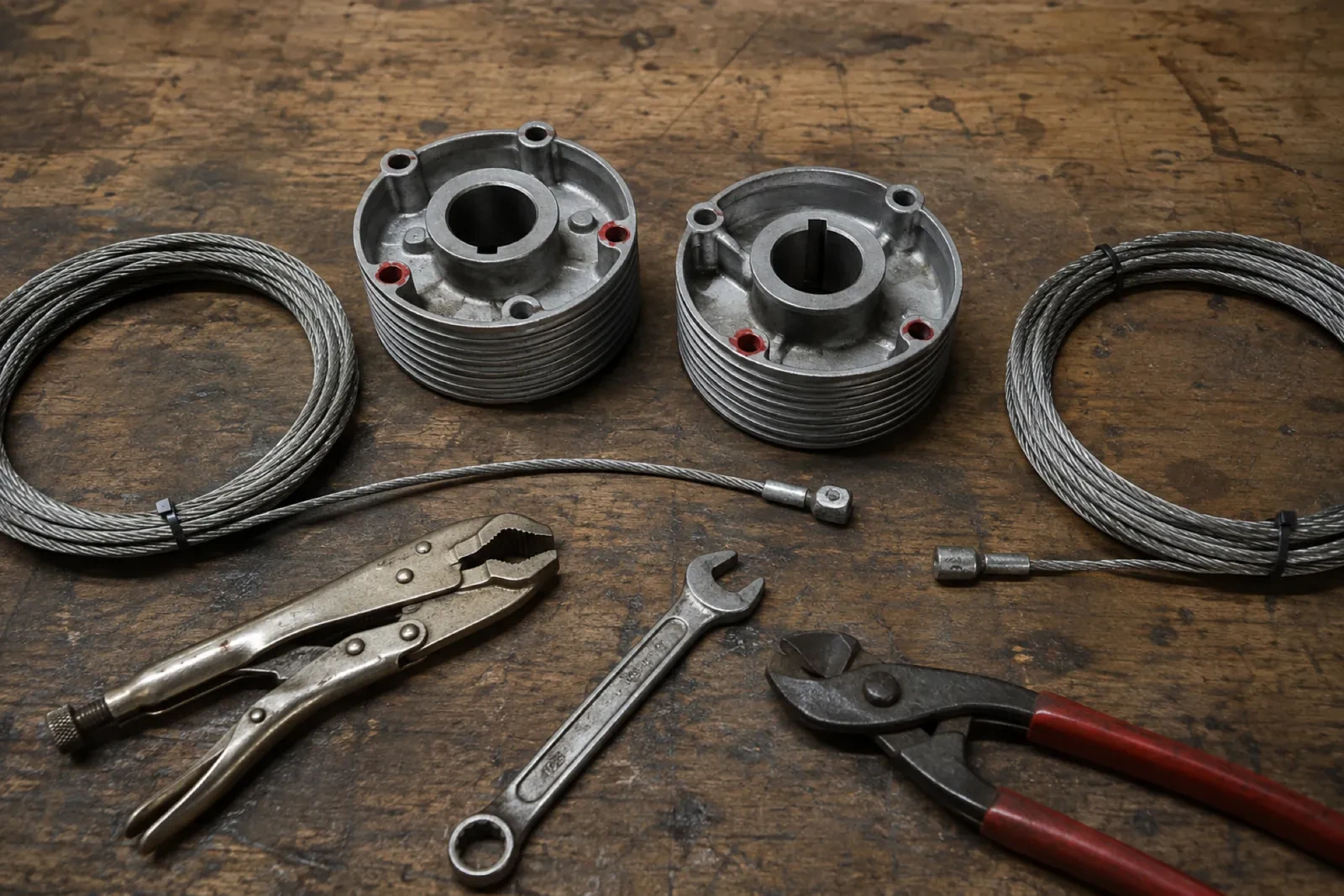
Detached houses commonly have attached two-car garages with a wide double door, which is a heavy door on a pair of torsion springs. Spring and cable work on these doors is done as a matched set so the door lifts level and the opener carries only its intended load.
Nearby
Open 24/7
Request a visit
After a cold night the door stays open until the garage warms up.
Call now · open 24/7(249) 490-5342- On-site assessment preferred
- Same fees day, night or weekend
- 21 years in business